
Casual
Zombie Coin Rush
Coins keep a combo alive for three seconds each. Break the chain and the multiplier is gone.
Supply Run is a ninety-second collection game with a rising cost. Crates appear, you grab them, and every crate collected adds a zombie to the map. The game you finish is one you built yourself.
Collect as many supply crates as possible in ninety seconds. Each crate collected increases zombie density.
| Action | Keyboard / mouse | Touch |
|---|---|---|
| Move | W A S D or Arrow keys | Left joystick |
| Pause | P or Esc | Pause button in the bar |
Pause with P or Esc, restart with R. The game pauses automatically if you switch tabs. Full details in zombie game controls explained.
Tying spawn rate to your own success is what makes this more than a collect-a-thon. A cautious player finishes with a low score in a nearly empty street; an aggressive player finishes with a high score in a street they can barely move through. Both are valid, and the interesting play is finding where on that spectrum your own reactions actually sit.
Crates appear in clusters rather than singly, which creates a recurring decision: take the near cluster of two or commit to the far cluster of four. The far cluster is worth more and costs travel time during which more crates spawn elsewhere, so greed is not automatically wrong.
There is no health. Contact with a zombie costs you five seconds of the ninety, which keeps the game friendly while still making mistakes meaningful. Losing fifteen seconds to three careless collisions is usually the difference between a good score and an average one.
Chosen by shared category, mechanics and difficulty — not at random.
Coins keep a combo alive for three seconds each. Break the chain and the multiplier is gone.
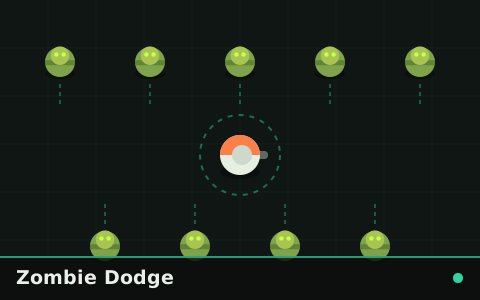
One rule: do not get touched. Waves of zombies cross the screen in patterns you can learn.
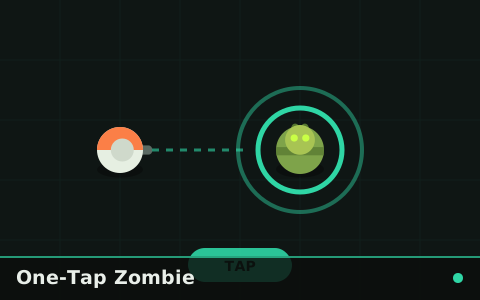
One button, one job: strike at exactly the right moment. Miss twice and it is over.

Side-on sprint through a stylised graveyard. Jump the headstones, duck the branches, reach the gate.

Sixty seconds, no movement, pure aim. Hit targets before they drop and keep your accuracy above the line.

Our flagship title. Three stages that each change the rules: clear the streets, hold the depot, reach extraction.
Cornerstone Guide
Score is not the same as survival. Understanding what a scoring system actually rewards is usually worth more than getting better at the game.
Movement
Wide circles, diagonal crossings and the two-second rule — the movement patterns that work across every category on this site.
Beginner
Never played a browser arcade game? Start here — what to expect, which game to open first, and the four things worth knowing before you do.
Browse the zombie casual arcade category, the full library of 30 games, or the newest additions. If you are not sure what to try next, the ultimate guide suggests an order.