On this page
- How to use this guide
- A learning path through all thirty games
- The full library by category
- Five principles that apply to every game here
- Where to go from here
- Difficulty ranking of all thirty games
- Games by session length
- Games by what they train
- A four-week improvement plan
- Things worth knowing that are not obvious
- Every game's single most important tip
- Which game to play right now
How to use this guide
This is the reference page for the whole library. If you are new, follow the learning path in the next section. If you already play here, skip to the strategy section — those five principles apply to every game on the site and are where most improvement comes from.
Every game linked here is playable immediately in your browser, with no download and no account.
A learning path through all thirty games
The order below introduces one new demand at a time. It is not a difficulty ranking — it is a teaching sequence.
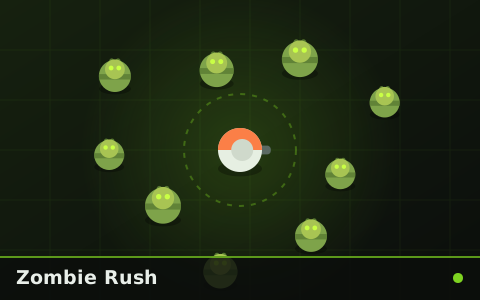
- Zombie Rush — movement only. Learn spacing without any other pressure.
- Zombie Dodge — movement against patterns. Learn to read shapes.
- Graveyard Escape — timing with two inputs. Learn fixed-distance jumps.
- Zombie Target — aim in isolation.
- Zombie Blaster — the full shooter loop: move, aim, fire, reload.
- Zombie Defense — the same skills with an objective you must protect.
- Zombie Hunter — prioritisation under genuine pressure.
- Zombie Arena — decisions that compound across a run.
- Ultimate Zombie Arcade — everything, in three stages.
Working through those nine in order takes roughly two hours and covers every mechanic used anywhere on the site. The remaining twenty-one games are variations you can then approach in any order.
The full library by category
Zombie Shooters
- Zombie Blaster — arena shooting with reloads. The canonical starting point.
- Zombie Wave — fixed position, rotation and heat management.
- Zombie Target — 60-second accuracy challenge.
- Zombie Hunter — visible time-to-contact; pure triage.
- Zombie Arena — rounds with upgrade choices.
- Ultimate Zombie Arcade — three-stage flagship.
Zombie Survival
- Zombie Rush — no weapon, pure movement.
- Last Survivor — melee with a real cooldown.
- Night Survivor — torch cone and battery.
- Zombie Swarm — dense crowds and a repel pulse.
- Blackout Survival — scheduled power cuts.
- Infection Zone — proximity infection and collection.
Zombie Defense
- Zombie Defense — one central objective.
- Zombie Barricade — shoot or repair, never both.
- Safe House Defense — four entry points, no weapon.
- Zombie Roadblock — placement and planning, no reflexes.
Zombie Escape
- Zombie Escape — patrol timing and routing.
- Dead City Escape — fog of war and keycards.
- Graveyard Escape — one-tap side-scrolling escape.
- Emergency Escape — a countdown extended by checkpoints.
- Zombie Chase — a single relentless pursuer.
Zombie Runner
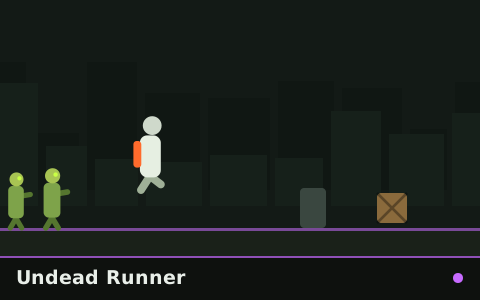
- Undead Runner — jump and slide endless runner.
- Zombie Highway — four lanes plus a fuel gauge.
- Zombie Sprint — three lanes, pure reaction.
- Rooftop Survivor — variable-height jumping.
- Zombie Tunnel — free vertical movement.
Zombie Casual Arcade
- Zombie Dodge — eleven formations, one rule.
- Supply Run — 90 seconds of collection.
- One-Tap Zombie — single-button timing.
- Zombie Coin Rush — combo chains.
Five principles that apply to every game here
- Look further ahead than feels necessary. The far edge of the screen in a runner, the zombie that matters in three seconds in a shooter, the objective's health bar in a defense game. Same skill, different clothes.
- Rank by arrival time, not distance. The nearest threat is frequently not the most urgent one, and acting on distance is the most common source of avoidable damage.
- Never occupy a position with one exit. Corners and walls halve your options, and almost every avoidable death is preceded by a movement into constrained space.
- Spend resources; do not hoard them. An unspent cooldown at the moment you lose was wasted, not saved.
- Restart immediately. The run that just ended is still in working memory for a few seconds. That is the cheapest learning available anywhere.
Where to go from here
If you want to go deeper on one area, these are the guides that cover each in full:
- Wave strategy — the four phases of a wave and how to play each.
- Aim — the three components and how to practise each.
- Survival — spacing, escape routes and crowd reading.
- Defense — threat ranking and repair economics.
- Runners — patterns, landmarks and lane commitment.
- Scoring — reading what a scoring system actually pays for.
Difficulty ranking of all thirty games
Difficulty labels on cards describe execution pressure. This ranking is about how long it takes to get competent, which is a different and often more useful question.
| Tier | Games | What makes them this tier |
|---|---|---|
| Gentle start | Graveyard Escape, Zombie Dodge, Zombie Roadblock, Supply Run, Zombie Coin Rush | One or two inputs, forgiving failure, no reflex spikes |
| Standard | Zombie Rush, Zombie Blaster, Zombie Escape, Undead Runner, Zombie Defense, Zombie Target, Emergency Escape | Full control schemes, clear feedback, learnable in a session |
| Demanding | Last Survivor, Zombie Wave, Zombie Arena, Zombie Barricade, Zombie Swarm, Zombie Highway, Zombie Tunnel, Rooftop Survivor, Dead City Escape, Infection Zone, One-Tap Zombie | Two competing demands at once |
| Punishing | Zombie Hunter, Night Survivor, Blackout Survival, Safe House Defense, Zombie Sprint, Zombie Chase, Ultimate Zombie Arcade | No recovery from a bad decision, or an unwinnable end state by design |
Nothing in the punishing tier is unfair — every one of them passes the attribution test. They are simply built so that a mistake cannot be shot, run or repaired away.
Games by session length
Sorted by how long a single attempt actually takes, which is usually the practical question.
- Under a minute: One-Tap Zombie, Zombie Sprint, Zombie Dodge.
- Fixed rounds: Zombie Target (60s), Supply Run (90s).
- One to four minutes: Zombie Rush, Undead Runner, Zombie Tunnel, Rooftop Survivor, Zombie Chase, Zombie Escape, Emergency Escape, Graveyard Escape, Zombie Coin Rush, Zombie Swarm.
- Three to eight minutes: Zombie Blaster, Zombie Hunter, Night Survivor, Blackout Survival, Infection Zone, Safe House Defense, Zombie Highway, Dead City Escape.
- Four to fifteen minutes: Zombie Wave, Zombie Arena, Zombie Defense, Zombie Barricade, Zombie Roadblock, Last Survivor, Ultimate Zombie Arcade.
Games by what they train
If you want to work on something specific, this is the fastest route to the right game.
| Skill | Best game for it | Why |
|---|---|---|
| Raw aim | Zombie Target | No movement or survival pressure; every miss is an aim error |
| Target priority | Zombie Hunter | Arrival times displayed; priority becomes readable |
| Movement and spacing | Zombie Rush | No weapon at all |
| Crowd reading | Zombie Swarm | Individual tracking impossible from the start |
| Threat triage | Zombie Defense | The thing to protect is not you |
| Routing | Safe House Defense | Travel time is the constraint |
| Reaction speed | Zombie Sprint | One decision at a time, at the limit |
| Timing precision | One-Tap Zombie | One input, narrow window |
| Route planning | Zombie Escape | Patrols are fully predictable |
| Resource allocation | Zombie Roadblock | No reflex pressure at all |
A four-week improvement plan
If you want structure rather than browsing, this covers every core skill in about twenty minutes a day.
- Week one — mechanics. Zombie Target daily (three rounds), plus Zombie Blaster. Goal: stop watching your own bullets, reload on every wave clear.
- Week two — movement. Zombie Rush and Zombie Dodge daily. Goal: never occupy a position with one exit; thread gaps rather than fleeing.
- Week three — decisions. Zombie Hunter and Zombie Defense. Goal: rank by arrival time rather than distance, in both directions.
- Week four — integration. Zombie Arena and Ultimate Zombie Arcade. Goal: apply all three under sustained pressure with resources to manage.
Re-test with Zombie Target at the end of each week and note the accuracy figure. It is the only number on the site that is directly comparable week to week, which makes it the closest thing to an objective progress measure.
Things worth knowing that are not obvious
A collection of specifics that are true across the library and rarely stated.
- Every game pauses when you switch tabs. No run is lost to a notification.
- R restarts from the game-over screen, and the Play Again button is focused by default, so Enter works too.
- Enemy colour coding is consistent site-wide. Lighter and smaller means faster; darker and larger means tougher. Learn it once.
- Brutes are almost never worth killing. Moving away delays them for free, in every game that has them.
- Related games are ranked, not random. Shared category, mechanics and difficulty, in that order.
- Best scores are per-browser. No account, no sync, and clearing site data removes them.
- Two games are meaningfully harder without sound — Night Survivor and One-Tap Zombie — and both say so on their pages.
Every game's single most important tip
One line each — the thing that most improves results in that specific game.
- Zombie Blaster — reload the instant a wave clears.
- Zombie Wave — fire in bursts of five or six; a lockout costs three seconds.
- Zombie Target — click centres, not edges, and never rush a decoy.
- Zombie Hunter — moving away is an attack; it adds seconds to every countdown.
- Zombie Arena — take fire rate early, pierce once brutes appear.
- Ultimate Zombie Arcade — stage one is a shopping trip, not a firefight.
- Zombie Rush — cut between two zombies rather than fleeing from one.
- Last Survivor — step back while the cooldown refills.
- Night Survivor — sweep the torch in a full circle every eight seconds.
- Zombie Swarm — the pulse is for escaping, not for clearing.
- Blackout Survival — spend the last five seconds of light moving to open ground.
- Infection Zone — sit around 60–70% infection while collecting.
- Zombie Defense — shoot what is closest to the generator, not to you.
- Zombie Barricade — decide which section you are sacrificing before you have to.
- Safe House Defense — board the point under attack, not the weakest one.
- Zombie Roadblock — two strong lanes beat four weak ones.
- Zombie Escape — watch one full patrol cycle before committing.
- Dead City Escape — explore in a spiral, not a line.
- Graveyard Escape — jump at a fence post, not when it looks close.
- Emergency Escape — price every detour in seconds.
- Zombie Chase — turn sharply and cut close around obstacles.
- Undead Runner — after a mistake, skip the next crate.
- Zombie Highway — plan around fuel, not around gaps.
- Zombie Sprint — learn five patterns; that is where the jump comes from.
- Rooftop Survivor — look at the landing roof, not the gap.
- Zombie Tunnel — drift, do not dart.
- Zombie Dodge — stay near the centre by default.
- Supply Run — take the far cluster early, the near one late.
- One-Tap Zombie — strike on the sound, not the ring.
- Zombie Coin Rush — follow the trail, not the biggest cluster.
Which game to play right now
The most practical question, answered directly. Find the row that matches your situation.
| If you… | Play | Because |
|---|---|---|
| have never played anything like this | Graveyard Escape | Two inputs, clear goal, a gate to reach |
| have two minutes | One-Tap Zombie | Runs end in seconds; restart is one tap |
| want to finish something | Zombie Escape | Real win condition on every level |
| want to feel effective immediately | Zombie Blaster | Instant, satisfying feedback |
| find aiming frustrating | Zombie Rush | No aiming exists at all |
| want to think, not react | Zombie Roadblock | No reflex requirement whatsoever |
| want to measure your aim | Zombie Target | Fixed rounds, honest accuracy figure |
| are on a phone, one-handed | Graveyard Escape | Tap and swipe, nothing else |
| want a long session with progression | Zombie Arena | Upgrades that compound across rounds |
| want the hardest thing here | Zombie Hunter | Spawn rate eventually exceeds your fire rate |
| want everything at once | Ultimate Zombie Arcade | Three stages, three different skills |
| want something relaxing | Zombie Coin Rush | No death; the penalty is only economic |
If none of those fit, use the Random Game button in the header or on any category page. It picks from the whole library, or from a single category if you press it on that category's page.
Key takeaways
- Nine games in a specific order cover every mechanic on the site in about two hours.
- Look further ahead than feels necessary — it is the highest-value habit in every category.
- Rank threats by arrival time rather than distance.
- Never occupy a position with only one exit.
- Restart immediately after a loss, while the run is still in working memory.
- Nothing in the punishing tier is unfair — those games simply remove your ability to recover from a bad decision.
- Pick a game by the skill you want to train; each one isolates something specific.
- A four-week plan of twenty minutes a day covers mechanics, movement, decisions and integration.
- Zombie Target's accuracy figure is the only directly comparable weekly progress measure on the site.
- Every game has one dominant tip; applying it is usually worth more than general practice.
- Pick by situation rather than by difficulty — the twelve-row table above covers most cases.
Frequently asked questions
Which game should I play first?
Are all thirty games actually different?
Do I need an account to save progress?
Which is the hardest game on the site?
Which game should I play if I have five minutes and want to improve?
Are the difficulty labels on the cards the same as this ranking?

Alex Morgan
Gaming Editor & Arcade Content Specialist
Alex Morgan is the editorial byline for everything published on Zombie Games Hub — game design notes, strategy guides and the tuning decisions behind all 30 arcade titles. More about our editorial byline.
Published · Last updated
Games mentioned in this guide

Ultimate Zombie Arcade
Our flagship title. Three stages that each change the rules: clear the streets, hold the depot, reach extraction.

Zombie Blaster
Top-down arena shooter with waves, reloads and a magazine that always runs dry at the worst moment.
Zombie Rush
No weapon, no cover, no plan but movement. Zombies come from every edge and only get faster.
Undead Runner
Endless side-scrolling sprint. Jump, slide, grab supplies and keep ahead of a horde that never tires.