
Shooter
Zombie Blaster
Top-down arena shooter with waves, reloads and a magazine that always runs dry at the worst moment.
The full library
Thirty original zombie games, every one of them playable right now in this browser. Filter by the kind of challenge you want, how hard it is, or how long you have.
Every game here was designed, coded and tuned in-house. Nothing is licensed, and nothing is a placeholder — if it is listed, it plays.
Your browser is blocking local storage. Favourites, recently played and best scores cannot be saved on this device. Every game still works — nothing will be remembered between visits.
Showing all 30 games
Top-down arena shooter with waves, reloads and a magazine that always runs dry at the worst moment.

You cannot run. Rotate, fire and hold a single position against formations that advance from the dark.

Sixty seconds, no movement, pure aim. Hit targets before they drop and keep your accuracy above the line.

Every zombie shows how long until it reaches you. Shoot the right one or nothing else matters.

Clear a round, pick an upgrade, go again. Small arena, escalating rounds, choices that compound.

Our flagship title. Three stages that each change the rules: clear the streets, hold the depot, reach extraction.
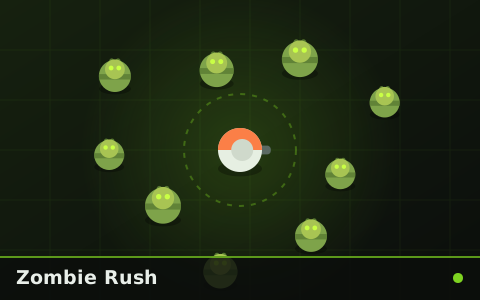
No weapon, no cover, no plan but movement. Zombies come from every edge and only get faster.

A melee swing with a real cooldown, an arena with no exits, and waves that stop being survivable politely.
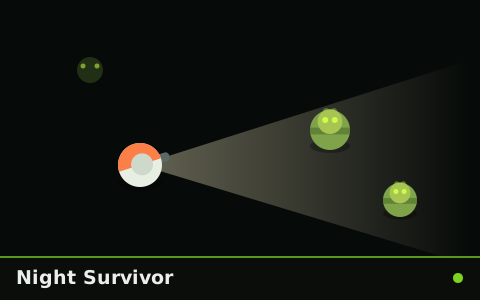
A torch beam, a draining battery and everything outside the cone is a guess.

Dozens of small, fast infected and one repel pulse on a cooldown. Crowd control, not marksmanship.

The lights fail on a schedule you cannot stop. Reach a generator before the dark arrives — or survive it blind.

Proximity infects you, not contact. Collect samples, then reach a safe zone before the meter fills.

A generator in the middle of the map, zombies that want it more than they want you, and one of you.
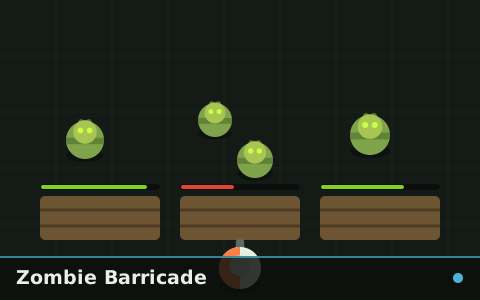
Three barricade sections, a hammer, a gun and never enough time to use both properly.

Four entry points, one of you, and a boarding action that takes exactly long enough to be a problem.
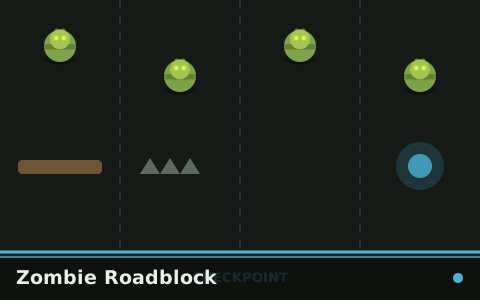
Zombies advance down four lanes toward a checkpoint. You have obstacles, a budget and no direct control.
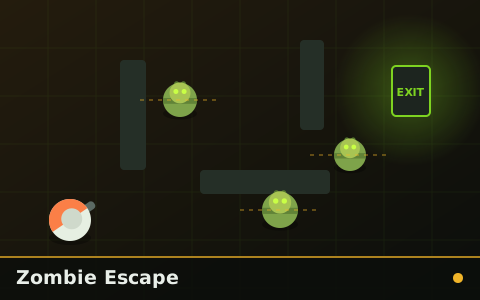
Find the exit, avoid the patrols, do not take the obvious route. Levels get denser, not bigger.

A city block you cannot see all of, two keycards you have to find, and one exit that only opens with both.

Side-on sprint through a stylised graveyard. Jump the headstones, duck the branches, reach the gate.
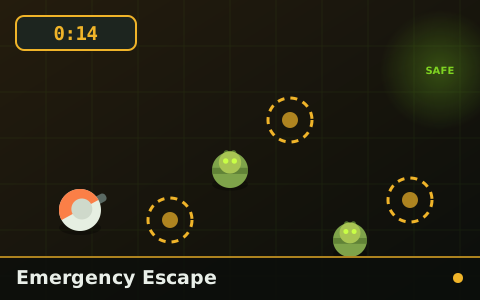
A countdown that only checkpoints can extend. Reach the safe zone or run out of clock trying.

One zombie. It never stops, never loses you, and gets faster every checkpoint you reach.
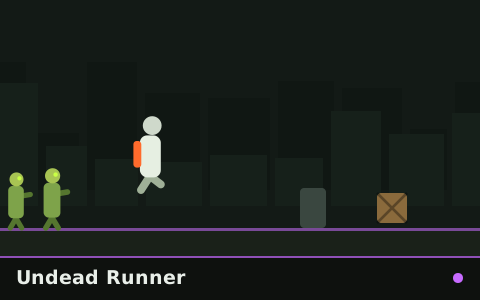
Endless side-scrolling sprint. Jump, slide, grab supplies and keep ahead of a horde that never tires.

Four lanes of ruined highway, a fuel gauge and obstacles arriving faster than you would like.

Three lanes, no jumping, and obstacle patterns that arrive at the edge of what anyone can react to.

Rooftop to rooftop above a flooded street. Variable gaps, variable heights, one jump button.

No lanes. Free vertical movement through a service tunnel that keeps getting narrower.
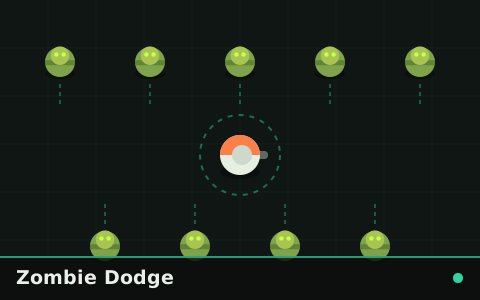
One rule: do not get touched. Waves of zombies cross the screen in patterns you can learn.

Ninety seconds to gather as many supply crates as you can while the streets fill up behind you.
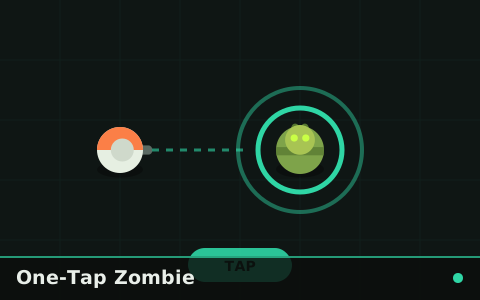
One button, one job: strike at exactly the right moment. Miss twice and it is over.

Coins keep a combo alive for three seconds each. Break the chain and the multiplier is gone.
Nothing matches that combination of filters. Try a different category, clear the filters, or let us pick one for you.
Games are grouped into six categories by what they actually ask of you rather than by theme. Shooters test aim and target priority. Survival games remove your ability to fight back and leave you with movement. Defence games attach you to something you must protect. Escape games have a real exit and a real win. Runners give you one decision at a time. Casual arcade games take a single mechanic and push it until it breaks you.
Difficulty labels describe execution pressure rather than depth. A game rated Easy may still be strategically deep — Zombie Roadblock is the clearest example, since it never asks you to react quickly.
New to all of this? Start with the beginner's guide, or read the ultimate guide for a suggested order to play everything in.