On this page
- Reaction time is not the bottleneck
- The four stages of a response
- How to compress recognition
- How to compress decision
- Buying time instead of saving it
- What genuinely degrades reaction
- Measuring your own numbers
- Chunking: why experts appear faster
- Anticipation and its costs
- Practical ways to buy milliseconds
- What the research generally supports
- Reaction across input devices
Reaction time is not the bottleneck
Players who struggle with fast games usually conclude their reactions are too slow. This is almost never the limiting factor, and believing it is leads to practising the wrong thing.
A simple visual reaction — see a flash, press a button — takes most adults somewhere around 200 to 250 milliseconds. That number is largely fixed. It varies with fatigue, caffeine and age, and it does not improve much with practice.
But almost nothing in a game is a simple reaction. Real gameplay requires recognising what you are seeing, deciding what to do, and then executing. Those additional stages take far longer than the raw reaction, and unlike raw reaction, they compress enormously with experience.
You cannot make your reflexes faster. You can make the decision they are waiting for much smaller.
The four stages of a response
- Detection (~50 ms) — noticing that something changed. Barely trainable, but heavily affected by where you are looking.
- Recognition (100–500 ms) — identifying what it is. Enormously trainable. This is where nearly all improvement happens.
- Decision (50–400 ms) — choosing a response. Trainable, and collapses to almost nothing when the response is habitual.
- Execution (~150 ms) — physically pressing. Largely fixed.
Detection and execution together account for roughly 200 ms and are effectively constants. Recognition and decision together can range from 150 ms for an experienced player to nearly a second for a beginner. That gap — up to 750 ms — is the entire practical difference between players, and it has nothing to do with reflexes.
How to compress recognition
Recognition time drops when the thing you are recognising is a familiar whole rather than a set of parts. This is the same mechanism that lets a fluent reader take in a word at a glance while a beginner sounds out letters.
- Learn enemy silhouettes. Recognising 'runner' by shape is far faster than observing that something is small and moving quickly.
- Learn obstacle patterns as units. One recognition beats four assessments.
- Reduce the vocabulary. Play one game repeatedly for a while. Switching constantly means never building recognition in any of them.
- Use colour and audio. Games that encode urgency in colour, like Zombie Hunter, let you skip recognition almost entirely — red means act.
How to compress decision
Decision time collapses when the response is pre-committed. A player who has decided in advance that runners always get shot first does not spend decision time when a runner appears — they have already decided.
This is why rules of thumb are so valuable in arcade games, even imperfect ones. A rule that is right 85% of the time and takes zero decision time beats a judgement that is right 95% of the time and takes 300 ms, because the 300 ms is frequently the entire margin available.
| Situation | Pre-committed rule | Time saved |
|---|---|---|
| Runner appears | Kill it now, always | ~300 ms |
| Wave clears | Reload immediately | ~200 ms |
| Two lanes blocked | Take centre | ~250 ms |
| Multiplier at risk | Protect the chain over the pickup | ~200 ms |
Buying time instead of saving it
The other half of the equation is increasing the time available rather than reducing the time needed. This is frequently easier.
- Look further ahead. Watching the far edge of the screen rather than your character can double your available window in a runner.
- Position defensively. Standing in open space means threats take longer to arrive. Standing against a wall means they arrive from directions you cannot see.
- Create distance. In survival games, movement away from a cluster adds genuine seconds to every threat in it.
- Reduce the number of things needing a response. Killing runners early means fewer simultaneous decisions later.
A player who buys 400 ms through positioning has done more than one who shaved 40 ms off their execution, and the positioning is far easier to learn.
What genuinely degrades reaction
Since raw reaction is mostly fixed, the practical concern is avoiding the things that make it worse.
- Fatigue. The largest factor by a wide margin. Reaction degrades measurably within thirty to forty minutes of continuous play.
- Frustration. Emotional arousal speeds up execution and degrades recognition, which is why tilted play produces fast wrong inputs.
- Poor visibility. Low contrast and small screens push detection time up. Playing fullscreen genuinely helps.
- Input lag. Adds directly to total response time. A wired mouse and a responsive display are worth more than any amount of reflex practice.
If your scores drop after twenty minutes, that is not a plateau — it is fatigue. Short sessions with breaks produce better results than long ones, consistently.
Measuring your own numbers
General figures are useful context, but your own are more actionable, and you can get them from games you already play.
- Simple reaction proxy. In One-Tap Zombie, a run where you are hitting consistently means your raw reaction plus recognition is comfortably inside the strike window. Missing early rather than late means anticipation, not slowness.
- Recognition proxy. In Zombie Sprint, your distance is dominated by pattern recognition rather than reaction. A sudden jump in results means recognition improved, not reflexes.
- Decision proxy. In Zombie Hunter, arrival times are displayed. If you still shoot the wrong target, the bottleneck is decision-making rather than perception.
Running those three occasionally tells you which of the four response stages is currently limiting you, which is far more useful than a generic reaction-test score.
Chunking: why experts appear faster
The mechanism behind expert performance in fast games is well understood and it is not reflexes. It is chunking — the grouping of several pieces of information into one unit.
A beginner reading a lane runner sees three obstacles and makes three assessments. A practised player sees one pattern and makes one. Same eyes, same reflexes, a third of the processing.
The same effect appears everywhere in these games:
- Enemy silhouettes. 'Runner' is one chunk; 'small, pale, moving quickly' is three assessments.
- Wave composition. 'Runner-heavy wave' is one chunk that carries a whole response with it.
- Formations. 'Pincer' is one chunk; six individual approach vectors is six.
- Board states in defense. 'Two arcs, brutes leading' is one chunk that determines your position for the next ten seconds.
Chunking is why depth of practice beats breadth. Chunks are game-specific and built through repetition, so rotating through ten games builds none of them.
Anticipation and its costs
Anticipating — acting before the stimulus rather than in response to it — is how players beat windows that are shorter than their reaction time. It is also how they miss.
In One-Tap Zombie, a strike window can be under a third of a second. Pure reaction cannot reliably hit that. What good players do instead is start the movement based on the approach, so the press lands inside the window without a reaction ever occurring.
- Anticipation works when the cue is reliable. A fixed approach speed, a consistent audio ramp, a known pattern.
- It fails when the cue is shuffled. Which is exactly why that game shuffles zombie types — it forces recognition before anticipation.
- Early misses are anticipation errors, not slowness. If you consistently miss early, you are anticipating an approach speed that is not the one in front of you.
- Late misses are genuine reaction limits. Rarer, and usually a sign of fatigue rather than capability.
Practical ways to buy milliseconds
Since the components you can shorten are limited, increasing the time available is often the better lever. These are ordered by how much they typically return.
- Look further ahead. Watching the far edge of a runner's screen rather than your character can roughly double the available window. Nothing else on this list comes close.
- Play fullscreen. A larger image means threats are perceptible sooner. Free, and it applies to every game.
- Position for visibility. Open ground means threats approach along longer visible paths; edges mean they arrive from behind.
- Reduce simultaneous decisions. Killing fast enemies early means fewer things demanding a response later.
- Fix input lag. A wired mouse and a responsive display add directly to your total response time. Real, but smaller than the four above.
A player who buys 400 ms through positioning has gained more than one who shaved 40 ms off execution — and the positioning is far easier to learn.
What the research generally supports
A brief and deliberately hedged summary, since this is the one area of these guides where we are not describing our own code.
Simple visual reaction times for healthy adults are widely reported in the region of 200 to 250 milliseconds, with meaningful variation between individuals and within the same individual across a day. Choice reaction — where a decision is required — is consistently slower than simple reaction, and gets slower as the number of options rises.
Reaction is generally reported to decline gradually with age and to be degraded by fatigue and by time of day. Training effects on simple reaction time are usually described as small.
- What that means practically: your raw reaction is roughly fixed and worth protecting rather than training.
- What it does not mean: that you cannot get much faster at games. Recognition and decision time dominate real gameplay and both improve substantially.
We are describing broad, widely repeated findings rather than citing specific studies, in line with our fact-checking policy: the claims here are context for gameplay advice, not health information.
Reaction across input devices
Your total response time includes the hardware path, and the differences between input devices are small but real. Worth knowing mainly so you can stop worrying about the parts that do not matter.
| Factor | Rough contribution | Worth addressing? |
|---|---|---|
| Your recognition + decision | 150–900 ms | Yes — this is where everything is |
| Your raw reaction + execution | ~200 ms | No — largely fixed |
| Display refresh and pipeline | 10–40 ms | Marginally |
| Input device polling | 1–10 ms | No |
| Wireless versus wired | 1–5 ms | No |
The proportions are the point. The trainable part of your response is measured in hundreds of milliseconds; the entire hardware path is measured in tens. A player agonising over polling rate while watching their own character instead of the far edge of the screen has the priorities exactly inverted.
Where devices genuinely differ
Not in latency but in precision characteristics. A keyboard press is discrete — it puts you exactly where you intended, every time, which is why lane runners are strictly better on one. A mouse is continuous, which is why free aiming needs one. Touch is relative rather than absolute, which is why keeping your thumb on the glass matters so much.
Those differences change results far more than latency does, and they are about matching the input to the task rather than about buying faster hardware.
Key takeaways
- Raw reaction time is roughly fixed and is not what limits your play.
- Recognition and decision time account for the real differences between players, and both train well.
- Pre-committed rules eliminate decision time even when the rule is imperfect.
- Buying time through positioning and looking ahead is easier than shaving milliseconds off execution.
- Fatigue degrades reaction more than anything else. Short sessions beat long ones.
- You can measure which response stage limits you using three games you already have.
- Chunking — grouping information into single units — is what makes experts appear faster.
- Early misses are anticipation errors; late misses are genuine reaction limits, usually from fatigue.
- Looking further ahead buys more time than any other single change.
- The trainable part of your response is hundreds of milliseconds; the whole hardware path is tens. Prioritise accordingly.
Frequently asked questions
Can I improve my reaction time?
Do reaction-time trainers help with games?
Why am I slower some days?
Does a faster mouse or monitor matter?
Is anticipation cheating?
Does age matter?

Alex Morgan
Gaming Editor & Arcade Content Specialist
Alex Morgan is the editorial byline for everything published on Zombie Games Hub — game design notes, strategy guides and the tuning decisions behind all 30 arcade titles. More about our editorial byline.
Published · Last updated
Games mentioned in this guide

Zombie Sprint
Three lanes, no jumping, and obstacle patterns that arrive at the edge of what anyone can react to.
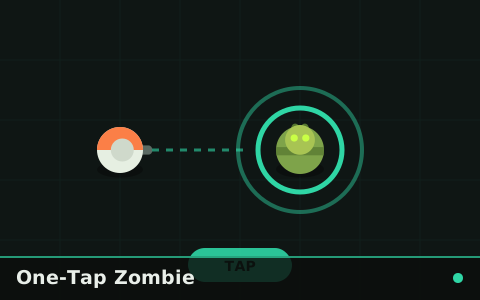
One-Tap Zombie
One button, one job: strike at exactly the right moment. Miss twice and it is over.

Zombie Target
Sixty seconds, no movement, pure aim. Hit targets before they drop and keep your accuracy above the line.
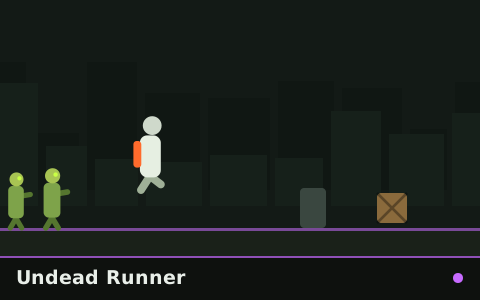
Undead Runner
Endless side-scrolling sprint. Jump, slide, grab supplies and keep ahead of a horde that never tires.