On this page
Mistakes of attention
- Watching your own bullets. Feels like confirming the shot; costs a third of a second of total inattention. Fix: treat the shot as finished when you release it.
- Watching your character in a runner. Feels like control; provides zero information. Fix: watch the far edge of the screen.
- Relaxing during the clear phase. Feels safe; is where most avoidable damage happens. Fix: sweep the field when under four enemies remain.
Mistakes of movement
- Retreating in a straight line. Feels like escape; walks you into unseen space. Fix: pass at an angle instead.
- Backing into a corner. Feels defensive; removes three of four escape directions. Fix: cross diagonally through open ground.
- Circling tightly. Feels efficient; lets the crowd cut the corner. Fix: use the whole arena.
Mistakes of resource use
- Hoarding escape tools. Feels prudent; an unused cooldown at the moment you die was wasted. Fix: spend when trapped, and recognise 'trapped' early.
- Reloading at empty. Feels efficient; guarantees a reload under pressure. Fix: reload at a third remaining.
- Repairing during an attack. Feels productive; refills a bucket with a hole in it. Fix: kill the attacker first.
Mistakes of session management
- Playing tired. Feels like persistence; reaction and accuracy both degrade measurably after thirty minutes. Fix: stop when your scores drop, not when you get frustrated.
The scores-drop signal reliably precedes the frustration signal. If you wait for tilt, you have already spent twenty minutes practising badly.
The pattern behind all of them
Every mistake above shares a shape: the wrong action feels safer or more productive than the right one. That is not coincidence. Arcade games are built so the intuitive response is usually adequate and occasionally wrong, and the occasions where it is wrong are exactly where the difficulty lives.
Which means improvement is mostly a matter of noticing which of your instincts are being exploited, and replacing those specific ones — rather than trying to get generally better.
Mistakes by category
The ten general mistakes cover most of it. These are the ones that are specific to one kind of game and therefore easy to carry in from another.
| Category | Category-specific mistake | Why it is tempting |
|---|---|---|
| Shooters | Killing brutes | They look dangerous and they are the easiest thing to hit |
| Survival | Fleeing rather than passing | Increasing distance feels like progress |
| Defence | Optimising your own safety | Every other genre trained you to |
| Escape | Taking the shortest route | Distance is visible; commitment points are not |
| Runners | Jumping unnecessarily | It feels safer than doing nothing |
| Casual | Chasing after a broken chain | Loss aversion |
Each of these is the correct habit from a different genre applied in the wrong place, which is why experienced players make them just as often as beginners — sometimes more.
Catching your own mistakes
The hard part is not knowing the list; it is noticing which ones you personally make. A short procedure that works.
- Play one run purely to observe. Do not try to win. Watch what you do rather than what happens.
- Note where your first damage came from. Direction, timing, enemy type.
- Note what you were doing three seconds earlier. This is where the actual mistake lives.
- Repeat twice more. Three data points is usually enough for a pattern to be obvious.
- Fix one thing. Only one, and give it a full session.
Most people discover they make two or three mistakes repeatedly rather than a wide variety, which is good news — it means a short list of fixes covers most of the gap.
Mistakes of expectation
A category not covered above: errors that come from expecting the wrong thing rather than doing the wrong thing.
- Expecting linear progress. Arcade improvement is step-shaped. A flat fortnight followed by a sudden jump is the normal pattern, not a sign of failure.
- Expecting your best run to be typical. Best scores are drawn from the top of a distribution. Your average is the honest measure and the one worth moving.
- Expecting a game to be fair to you specifically. Every run ends. That is the format rather than a judgement.
- Expecting practice to feel like improvement. The sessions where you deliberately do something badly in order to learn it are the productive ones, and they feel worse than ordinary play.
- Expecting one game to teach everything. Each game here isolates a skill. Depth in one plus breadth across a category beats grinding a single title.
These matter because they determine whether you keep playing long enough to improve, which is upstream of every tactical fix on this site.
Which mistake to fix first
Ten mistakes is too many to work on. They are not equally expensive, and fixing them in the right order means the early work pays for the later work.
| Order | Fix | Pays off in | Why first |
|---|---|---|---|
| 1 | Stop backing into corners | One session | The only movement error that is usually fatal alone |
| 2 | Stop watching your own bullets | One session | Frees a third of a second, dozens of times a minute |
| 3 | Reload on every wave clear | One session | Removes an entire category of death |
| 4 | Runners first, always | A few sessions | Corrects the single most common wrong instinct |
| 5 | Sweep before a wave ends | A few sessions | Where most avoidable damage happens |
| 6 | Spend resources rather than hoarding | A week | Needs the first five to be automatic first |
| 7 | Shorter sessions | Immediately, but hard | Multiplies the value of everything above |
The ordering is not arbitrary. The first three are single behaviours with immediate feedback, which is what makes them stick. Items four and five require the first three to be automatic, because they need attention that is currently spent elsewhere.
Item seven is last in the list and first in effect. Everything above it is learned faster in twenty-minute sessions than in hour-long ones, so if you only change one thing, change the length of your sessions and let the rest follow.
Key takeaways
- Watching your own bullets is the most expensive attention habit in the genre.
- Retreating in a straight line and backing into corners both feel safe and remove options.
- Hoarded resources at the moment of death were wasted, not saved.
- Reload at a third; repair only when nothing is attacking.
- Every common mistake feels safer than the correct action — that is why they persist.
- Category-specific mistakes are usually correct habits imported from a different genre.
- Three observation runs are enough to identify your personal pattern, which is usually only two or three mistakes.
- Progress is step-shaped and productive practice feels worse than ordinary play — both are normal.
- Fix corners, bullet-watching and reload timing first — they are single behaviours with immediate feedback.
Frequently asked questions
Which mistake costs the most?
How do I notice my own mistakes?
Is playing more the answer?
Why do experienced players make genre-transfer mistakes?

Alex Morgan
Gaming Editor & Arcade Content Specialist
Alex Morgan is the editorial byline for everything published on Zombie Games Hub — game design notes, strategy guides and the tuning decisions behind all 30 arcade titles. More about our editorial byline.
Published · Last updated
Games mentioned in this guide

Zombie Blaster
Top-down arena shooter with waves, reloads and a magazine that always runs dry at the worst moment.
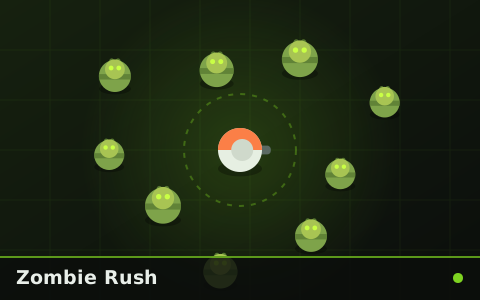
Zombie Rush
No weapon, no cover, no plan but movement. Zombies come from every edge and only get faster.

Zombie Defense
A generator in the middle of the map, zombies that want it more than they want you, and one of you.
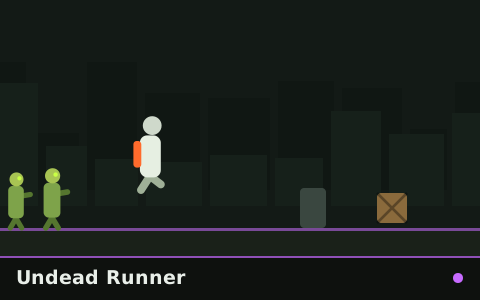
Undead Runner
Endless side-scrolling sprint. Jump, slide, grab supplies and keep ahead of a horde that never tires.